The Imaging Order
Learn how ACR Appropriateness Criteria, the Manual on Contrast Media and other ACR resources can help you choose the right imaging studies.
Read moreIn this issue, Ben Wandtke, MD, MS, Vice Chair for the ACR Quality and Safety Commission and Chair of the DICOE Committee discusses how the ACR® Diagnostic Imaging Center of Excellence (DICOE) is adding two new levels of recognition for organizations delivering consistently high-quality imaging care.
For more than a decade, the DICOE program has recognized organizations that demonstrate the infrastructure, policies and procedures required to ensure consistently high-quality care and service. Now, the program is evolving to include two additional tiers of recognition for the highest achievers.
Dr. Wandtke: The DICOE program has served hundreds of organizations throughout the country, helping them to validate and demonstrate that they are performing significantly above the average organization. DICOE sets the bar for what it means to be an excellent radiology practice across the board. It provides a comprehensive assessment of your facility — from structure and operations to technological skills and patient outcomes.
There are many aspects of a practice's performance that are evaluated as part of DICOE: Everything from quality registry participation, structured quality improvement programs, radiation safety practices and ensuring that practitioners are properly certified. It's a significant step above basic credentialing, which signifies that an organization is clearly going above and beyond the standard — setting themselves apart from the pack.
Dr. Wandtke: Since its inception, the DICOE recognition process has required excellence in imaging at a high level. To date, over 200 facilities have achieved DICOE recognition, but the DICOE Committee realized that when it comes to quality and safety, the best health systems know that no system is ever perfect, and all can still be improved. We decided that it is important to challenge great healthcare systems to become even better. We are taking the cream of the crop — the healthcare systems that have demonstrated that they care about providing an excellent level of services and care consistently and reliably — and inspire them to continue to improve.
We are piloting significant changes to the DICOE program, turning it into a tiered system of performance evaluation. Our goal is not just to ensure a facility is performing at an above-average level as a center of excellence, but we want to set the aspirations of organizations to achieve an even higher level of quality and safety.
Under the new DICOE program that is being launched on Nov. 30, an organization can be recognized at three tiers:
The DICOE program recertifies every three years, allowing sites to move up through the tiers as they continue to achieve more of the advanced DICOE domains.
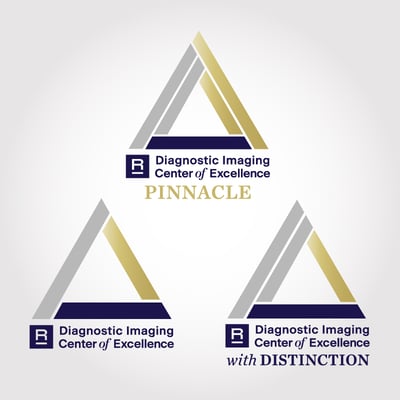
Dr. Wandtke: There are 10 new domains of performance we are calling advanced criteria, where sites can achieve additional points for programs and practices at the forefront of radiology quality and operations, substantially above and beyond the standard DICOE criteria. Some examples include structured systemic quality improvement programs, peer learning programs, recommendation follow-up programs and artificial intelligence performance monitoring programs.
Dr. Wandtke: With DICOE, you show your referring providers and patient that you're operating at the highest professional level. At the same time, the assessment process is designed to build an actionable, practical framework for improving the quality of your imaging care through data collection, peer feedback and detailed on-site analysis by a team of imaging experts.
It can be challenging for an imaging center to demonstrate to referring physicians, potential job candidates and patients that their services are the best available. DICOE is an external stamp of approval or validation from those who understand what excellence is in imaging. This recognition is something we hope sites will proudly display on their walls and marketing materials, so everyone knows they go above and beyond, and they continue to strive to be ever better.
Dr. Wandtke: Some of the eligibility requirements for DICOE include:
The DICOE team provides an objective, third-party analysis of each facility’s patient care, quality and radiation safety against the DICOE criteria for the three tiers. Sites can use the survey team’s recommendations to provide a true roadmap to help them reach and maintain operational excellence.
Dr. Wandtke: We're looking for these centers of excellence to demonstrate that they are providing consistently outstanding performance. Registry participation is a great way to show that with data. There are a number of ACR registries related to performance — from the Dose Index Registry, the General Radiology Improvement Database and the upcoming Early Lung Cancer Detection Registry — where sites can measure their performance and compare it to other like-minded organizations. Participation in at least two of the registries is a requirement for DICOE facilities.
Having benchmark data for your performance is the first step toward proving that you are excellent. The second step is creating a culture where your organization is focused on your performance and actively working to improve. Organizations that consistently perform at the highest level view this as part of who they are. It's a culture of continuous quality improvement, and that's one of the key practices we want to promote with the advanced criteria for the DICOE program.
Dr. Wandtke: The ACR Learning Network is where organizations throughout the country come together to perform structured projects that teach performance improvement and hold sites accountable to demonstrate improvement in the area that they're working on in order to graduate. Graduation from the ACR Learning Network tells us that an organization has been willing to put in the time and resources to take their team through an improvement project. They understand the structure of performance improvement, and they have demonstrated results in a way that we can validate from the outside. So, we've included that as one of our advanced criteria for additional points in the DICOE evaluation process. To encourage DICOE sites to participate in the learning network, the ACR will be providing one free learning network project registration with each DICOE accreditation or renewal.
Dr. Wandtke: We are concluding the pilot test of the new DICOE tiers this year and applying lessons learned to finalize the updated program. In 2026, we will begin assessing applicants against the three-tiered criteria. The program will be open to new sites as well as to sites that have already achieved DICOE recognition and are ready to up their game. We're creating a pathway for all of the DICOE sites to build upon their success and demonstrate that they are another step or two above their competition.
The Imaging Order
Learn how ACR Appropriateness Criteria, the Manual on Contrast Media and other ACR resources can help you choose the right imaging studies.
Read moreNew Draft Measures for 2027 MIPS
Explore ACR’s proposed 2027 MIPS measures and QCDR updates designed to improve radiology quality, reporting accuracy and patient outcomes.
Read moreCollaborate on Quality, Safety and Informatics
Discover how the 2026 ACR QS+I conference unites radiology quality, safety and informatics leaders to advance AI, collaboration and patient care.
Read more