NIH Promotes New Website
NIH launched a new topic-based website experience to simplify access to research resources, funding opportunities and health information.
Read more
Wisconsin Governor Tony Evers signed Gail’s Law (SB 264 / AB 263), requiring insurance coverage for diagnostic and supplemental breast imaging for women who need follow-up care after screening mammography March 19. The bill marks the culmination of a years-long advocacy effort to eliminate out-of-pocket barriers to medically necessary follow-up breast imaging. Gregg Bogost, MD FACR, former chair of the Wisconsin Radiological Society Government Relations Committee, sat down to share his experience in Wisconsin and answered a few questions about how the effort came together and what advocates in other states can learn from it.
Looking back, one of the most effective strategies was understanding from the beginning that this was going to be a multi-year process. We had to build on it incrementally, and that meant recognizing what was realistic in each session, reading the room, and building on prior efforts rather than assuming everything could be accomplished at once. That mindset really started years earlier with the 2017 breast density notification bill. The goal was always to address access issues, but we knew it would most certainly take time. What made the difference in 2025–26 was a combination of stronger political strategy, better data and a better-organized coalition effort. In Wisconsin, there has been a strong anti-mandate philosophy for some time, and to overcome that ideological obstacle, the coalition had to work on multiple fronts. But over the years, the political environment also shifted. The new legislative maps in Wisconsin took away some of the components of gerrymandering, and that created more room for moderation.
The unique challenge in Wisconsin was navigating the political dynamics. The coalition understood that, if they wanted to succeed, they had to deal directly with the political realities rather than wish them away. Identifying the right legislative champion was key to overcoming many of the obstacles. Representative Amanda Nedweski really brought it across the finish line. The advocates found a strong champion in Amanda who had a good relationship with leadership and colleagues and could carry the issue credibly inside the caucus. She really believed in the cause and worked tirelessly to make sure the coalition and legislative champions held together, and ultimately the bill passed the Assembly 96–0.
Another major point of resistance was concerns about cost. Legislators wanted to know what the coverage requirement would actually mean in real dollars, and that concern had to be taken seriously. At an ACR® meeting several meetings ago, I found out that Maryland had already mandated this coverage and had cost impact data showing roughly 7 cents per member per month to add the diagnostic payment requirement. The coalition also surveyed centers around the state and found abbreviated MRI was often in the $600 range, not in the $1,000 range initially being suggested. And there was increasing discussion about the downstream costs of delayed breast cancer diagnosis, including academic data from the University of Wisconsin.
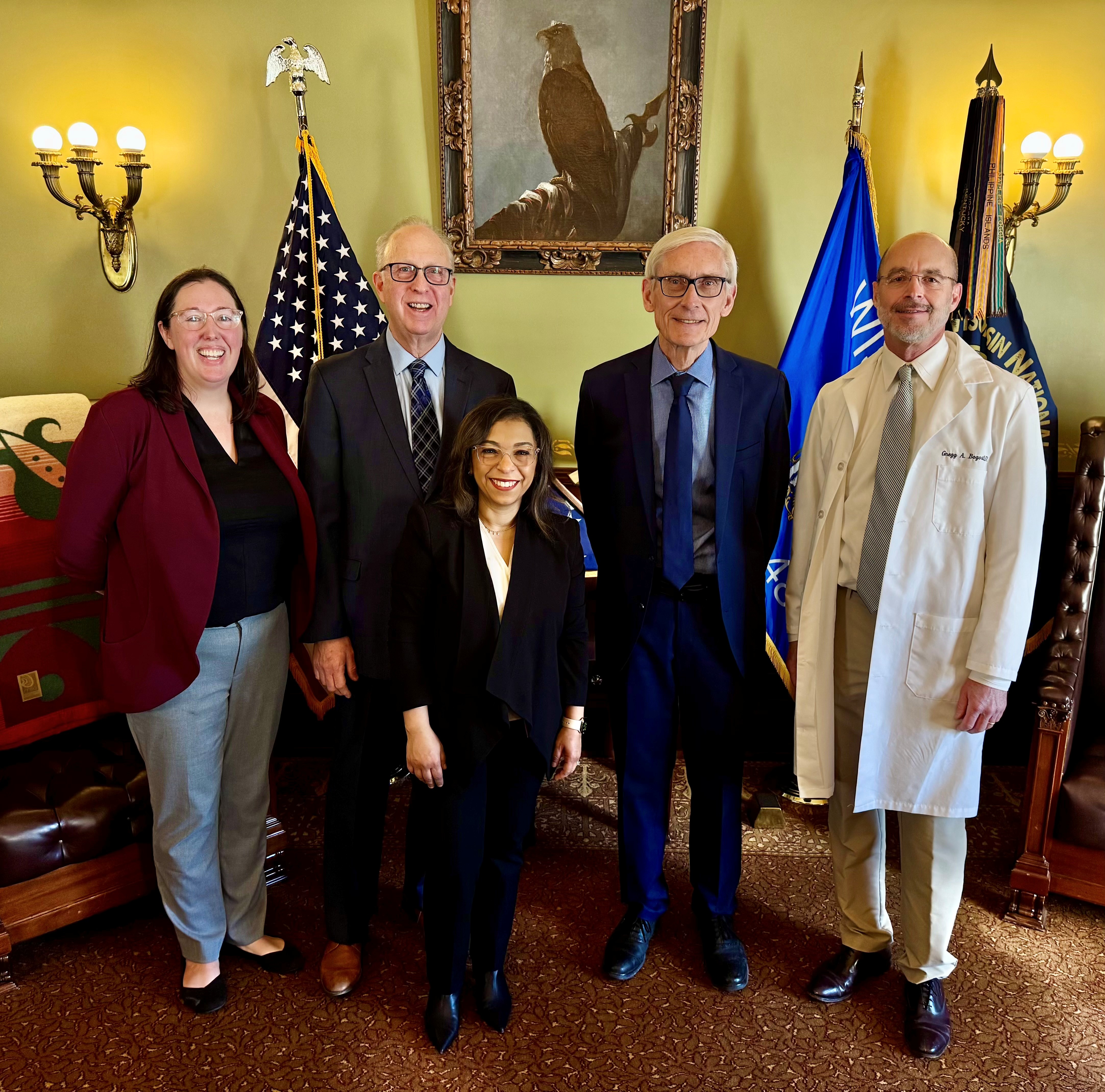
Erin Fabrizius (lobbyist), Michael Blumenfeld (lobbyist), Mai Elezaby, MD; Governor Tony Evers; and Gregg Bogost, MD, at the Wisconsin Gov. Evers bill signing of Gail's Law.
Stakeholder engagement was one of the defining strengths of the effort. The Early Detection Saves Lives coalition is very large, and it met regularly. It included national and local patient advocates, manufacturers, radiologists, breast imagers, physician groups and broader healthcare organizations. Participants included AdvaMed, Rayus, the Wisconsin Primary Health Care Association, the breast cancer coalition, Susan G. Komen, the American Cancer Society, GE, and the Wisconsin Society of Plastic Surgeons, among others. The coalition was strengthened by a much more organized public relations push than in earlier years. Op-eds were part of the effort, and there were an incredible number of legislative visits. The coalition also took additional steps to recognize legislators, which helped reinforce relationships and keep attention on the issue.
Physician engagement was also very important, especially finding the right kind of physician advocate. We needed someone with the right expertise, motivation, endurance and inspiration. Dr. Jennifer Bergin was an incredible advocate for us. Jen is a private-practice breast imager who prepared materials, did the research, testified, attended hearings and was present every step of the way. She also helped fine-tune the imaging details and educational efforts. Site visits, including one in Waukesha with Dr. Bergin, helped legislators connect the policy to actual care delivery.
Local and national patient advocates brought urgency and authenticity. Breast cancer is personal to many people, and once momentum began building, more and more people felt comfortable sharing their own stories or family connections. That emotional connection mattered, but it was most effective when paired with good data.
The Wisconsin Radiological Society has a long-time lobbyist with more than 20 years of experience who was integral to our work. That kind of experience matters for obvious reasons. The lobbyists understand the building, the personalities and the timing. Their advice is invaluable. Some of the more effective engagement strategies were not flashy but practical: repeated legislative visits, action alerts, coordinated social media, op-eds, site visits, tailored educational materials and a steady coalition rhythm over multiple years. The effort became more sophisticated over time. It was not just one group, but all of us working together.
I would say, look at this as a multi-year process. A clear path to the finish line may not be there right away, but that does not mean the effort is failing. Wisconsin built on earlier steps year after year. The 2017 notification law was only the first step. In 2021–22 session, the bill got a hearing and moved out of one chamber. The 2023–24 draft measure tested a broader policy approach but ultimately stopped short. By 2025–26, legislators were not starting from ground zero anymore. You build on it every year. That cumulative education matters.
You have to pick the right legislative champion and build the right coalition. Not just any sponsor, but a well-positioned legislative champion who exerts real influence. Someone who understands coalition work, too. Strong coalitions create clout beyond the physician side of advocacy. That means health systems, patient advocates, manufacturers, physician groups, and others all working together. And on the physician side, find the right breast imaging expert — ideally someone local, credible, deeply motivated, and able to sustain the effort.
Third, listen carefully and do not shy away from difficult questions. The Wisconsin advocates paid close attention to what legislators were asking, tailored their responses accordingly and aligned their resources effectively. They also listened to the advice of experienced lobbyists. It is equally important to harness and leverage as much expertise as possible. Local and national advocates may play different roles, but together they help move the issue forward. Staying focused and gathering the data needed to support your arguments takes discipline. Ask follow-up questions of legislators, listen
to the advice of lobbyists, aim to understand their concerns, and offer thoughtful answers.
A final practical lesson is to use every advocacy tool available. That includes your state government relations committee, your society manager or director, asking ACR national for help with call-to-action alerts, and increasingly, creating social media strategies that dovetail with those action alerts. Wisconsin’s effort showed the value of pairing traditional lobbying with modern communications and a coordinated coalition presence. We are grateful for the opportunity to share Wisconsin’s experience and hope it is helpful to others working to advance similar efforts.
For more information, contact Eugenia Brandt, ACR Senior Government Affairs Director.
NIH Promotes New Website
NIH launched a new topic-based website experience to simplify access to research resources, funding opportunities and health information.
Read moreACR Responds to Senate Finance RFI on Healthcare Reform
ACR responded to a Senate Finance RFI, advocating for imaging reforms that support timely care, physician judgment, and lower costs.
Read moreACR Joins Coalition Opposing Proposed H-1B Visa Fee
ACR joins healthcare groups opposing a proposed H-1B visa fee increase that could worsen physician shortages and limit patient access.
Read more