Sustainability in Radiology
The ACR Committee on Sustainability is leading the way in educating radiologists on how to prepare their practices to be more environmentally friendly.
Read more

The Radiology Leadership Institute’s innovative program is geared towards helping radiologists prepare for their first full-time job in the industry.

Landing your first full-time job can be challenging, regardless of the industry. However, for radiologists, the process can be even more daunting due to the myriad career options within the field today. Making decisions about the right practice setting, preparing for interviews and evaluating job offers can be overwhelming. Equipping yourself with practical information and finding a mentor who has faced similar challenges can significantly ease this transition. To address these needs, the Radiology Leadership Institute® (RLI) launched the Kickstart Your Career Workshop in 2018, with the goal of helping young radiologists successfully enter the workforce.
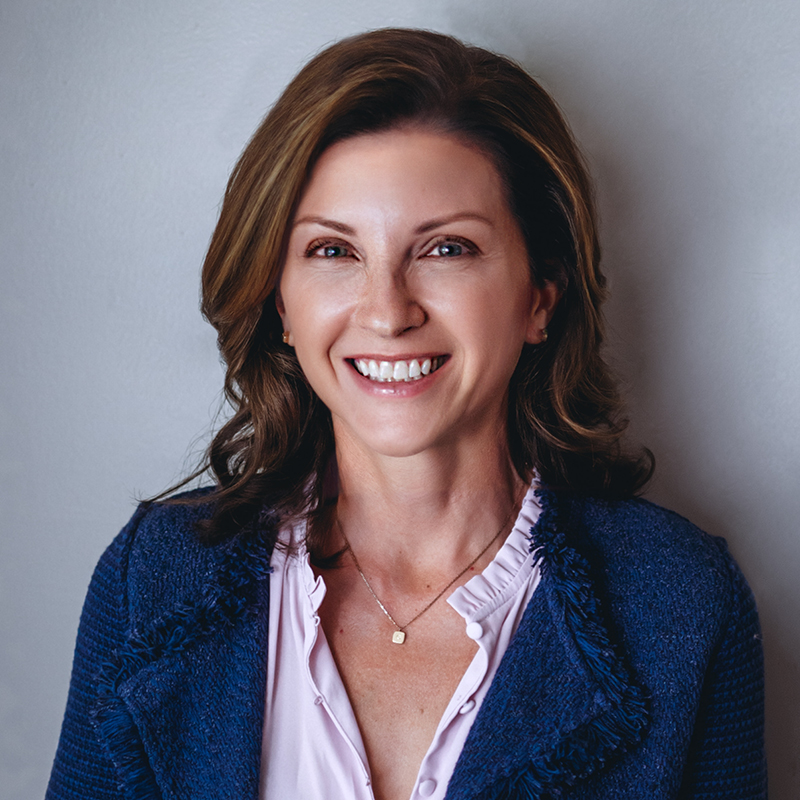
Frank J. Lexa, MD, MBA, FACR, chief medical officer of the RLI, and Anne Marie Pascoe, senior director of RLI, aimed to create a program specifically designed for young physicians transitioning into the workforce. Their goal was to help them get the job they want and navigate the professional challenges they will face during their first year. However, Lexa, Pascoe and the RLI wanted this program to offer more than the basic practical information — they wanted a more personalized experience. “Some of the other programs out there focus exclusively on how to pick a job, review a contract and other basic financial things,” Lexa says. “But we took it further by introducing the idea of helping them manage their career and asking questions like ‘What do you want to get out of your job beyond the paycheck?’ And 'where do you want to be in 10 years?'” This led to the launch of the RLI Kickstart Your Career Transition Mentorship Program.
Residency training programs, according to Luke Wilkins, MD, FSIR — a past Kickstart Your Career mentor — do an excellent job in training young physicians to be functional doctors. Specialty training in these programs sets young physicians up for success by making sure they have the clinical expertise needed to enter the workforce. But there are important non-clinical aspects that residency education does not typically cover, and that’s where Kickstart Your Career comes in. “Our training programs are very good at clinically preparing young physicians for the workforce. Our training programs are less effective at teaching people how to navigate a career because that's not what they're designed for,” says Wilkins. “They're designed to take a young physician and teach them Interventional Radiology or Nuclear Medicine. They’re not designed to help them identify what practice setting would be best for them or navigate their first years in practice.”
One of the most unique aspects of the Kickstart Your Career Transition Mentorship Program is that young physicians are paired with experienced physicians as their program mentors. The RLI looks for experienced physicians who are interested in helping the next generation of radiologists to join the program, just like Wilkins. “Mentorship has been something that's extremely important to me and my career development,” he says.
But we took it further by introducing the idea of helping them manage their career and asking questions like ‘What do you want to get out of your job beyond the paycheck?’ And ‘where do you want to be in 10 years?'
Wilkins credits his education background as a factor that influenced him to become involved as a mentor, as well as knowing how hard the transition from residency training to full-time work at a practice can be. “I come from a family of educators,” he says. “Both my parents were high school teachers, my dad was a high school math teacher, my mom was a high school English teacher. I was the first in my family to attend medical school and I was in the dark a lot. I want to pay that forward and try and help other generations of radiologists with trying to make career decisions.”
Finding willing mentors is just the first step of making a good match. To help make the young physician’s transition as easy as possible, other variables are considered when matching a mentor to a mentee. These can range from where in the country the mentee wants to practice, to what subspecialty they are interested in, to practice setting and size. As co-chair of the Kickstart Your Career Transition Mentorship program, Peter Van Geertruyden, MD, FACR, can attest, “We try to take as many variables into account as possible so that we can make the best possible match. For example, we match mentors and mentees by their geographic area. So, if I'm in Virginia, and we have someone who's interested in practicing in the mid-Atlantic area, it makes sense geographically since I am familiar with and understand the landscape.”
There are many reasons why young physicians should participate in the Kickstart Your Career program including providing a helping hand to those nervous about jumping into the workforce. Past participant, Austin Weyant, DO, was concerned about entering the workforce. While he had family in medicine, no one in his family or friend group had experienced what he was going through. “I didn’t really know anyone in a similar position to me,” Weyant says. “I had no idea outside of the greater medicine stuff. It prompted me to investigate different kinds of things, like different forums when I stumbled upon the RLI and started listening to some of the [Taking the Lead] podcasts just to get an idea of what is the greater radiology environment looks like.”
The RLI is a great ACR resource, and Karim Nasra, MD, another past Kickstart Your Career participant, knew he should take advantage of this opportunity to help himself transition to full-time practice. He immediately saw the benefit and decided to get involved. “You have to take advantage of every opportunity because you never know what it will lead to,” Nasra says. “There's really no downside. It's a chance to connect with somebody who has been successful in the field that you want to enter, who might have some insight into jobs or simply guidance on which job not to take.”
Despite the uncertainty, Weyant said the program helped guide him down the right path to a practice that fits his needs the best. Weyant’s mentor, Van Geertruyden, helped him go through the backgrounds of all the practices he was looking at to make the best decision for him. Weyant feels the program gave him confidence in his choice of a radiology practice and also set him up to meet his five-year goals. “I like the trajectory I’m on,” he says.
Van Geertruyden ended up being a great match for Weyant because Van Geertruyden had a lot of knowledge about practices in Virginia, where Weyant planned to work. Weyant said Van Geertruyden was happy to answer his questions and provide information about practices that he couldn’t get anywhere else. “He was very approachable and eager to talk to and answer questions,” Weyant says. “He gave me a baseline for many of the practices that were in Virginia and the mid-Atlantic area as well.”
Nasra credits Wilkins, his Kickstart Your Career mentor, with guiding him to his current position. Wilkins’s position is in a field that aligns with Nasra’s interests, and Wilkins was able to help answer Nasra’s questions on how to get there. “I managed to connect with an excellent mentor who kind of had the same goals,” Nasra says. “What he wanted out of a job was in line with mine. He gave a lot of insights into where I should apply to and what program best aligns with my future goals and endeavors.”
The RLI’s Kickstart Your Career program not only provides the practical information young radiologists need to transition to the workforce, but also provides an opportunity for experienced radiologists to share their experience with the next generation to arm them for success. In fact, Van Geertruyden used the Kickstart Your Career as a model to assist the ACR’s Military Radiology Committee create its Mentor-Mentee Match Program Guidelines, which pair military radiologists with experienced radiologists to help them transition to civilian practice.
Van Geertruyden took the matchmaking element of the Kickstart Your Career mentor program and leveraged it to enhance the military program. “We tried to match people given their military branch, Army, Navy and Air Force, and their background,” Van Geertruyden says.
The Kickstart Your Career Program has helped many residents ease their transition into the workforce. Anyone who has chosen to also participate in the Kickstart Your Career Transition Mentorship program agrees that it has been extremely beneficial. It offers a unique opportunity to learn from an experienced radiologist and get their input as a young physician navigates their way into the real world. Everyone involved in the program, including Lexa, encourages the next generation to get involved with the program so they can learn how to set themselves up for a successful career.
“We can help young physicians make better choices when picking a job and give them the tools they need for success in that first year,” Lexa says. “You can do more than just succeed in the sense of being able to stay at a job, but also thrive in that job and be the kind of person who's still helping the group and yourselves five, 10, 15 years down the road.”
Alexander Utano associate editor, ACR Press
Sustainability in Radiology
The ACR Committee on Sustainability is leading the way in educating radiologists on how to prepare their practices to be more environmentally friendly.
Read moreContinuing the Investment in Young Leaders
The 2026 cohort of the Philips Emerging Leaders RLI Scholarship builds on the success of its first year to prepare young leaders for the next generation of healthcare.
Read more
The End of My YPS Era
Jacob Ormsby, MD, MBA, reflects on how important the YPS portion of his career was — and how the College supports early career radiologists.
Read more