ACR Supports Radiation Therapy
ACR, ASTRO and ACRO agree that relying on legacy HOPPS cost distributions will irreparably harm freestanding radiation centers.
Read more

Longtime program chief talks about the program’s evolution and the importance of assessment through standardized, peer-reviewed cases.

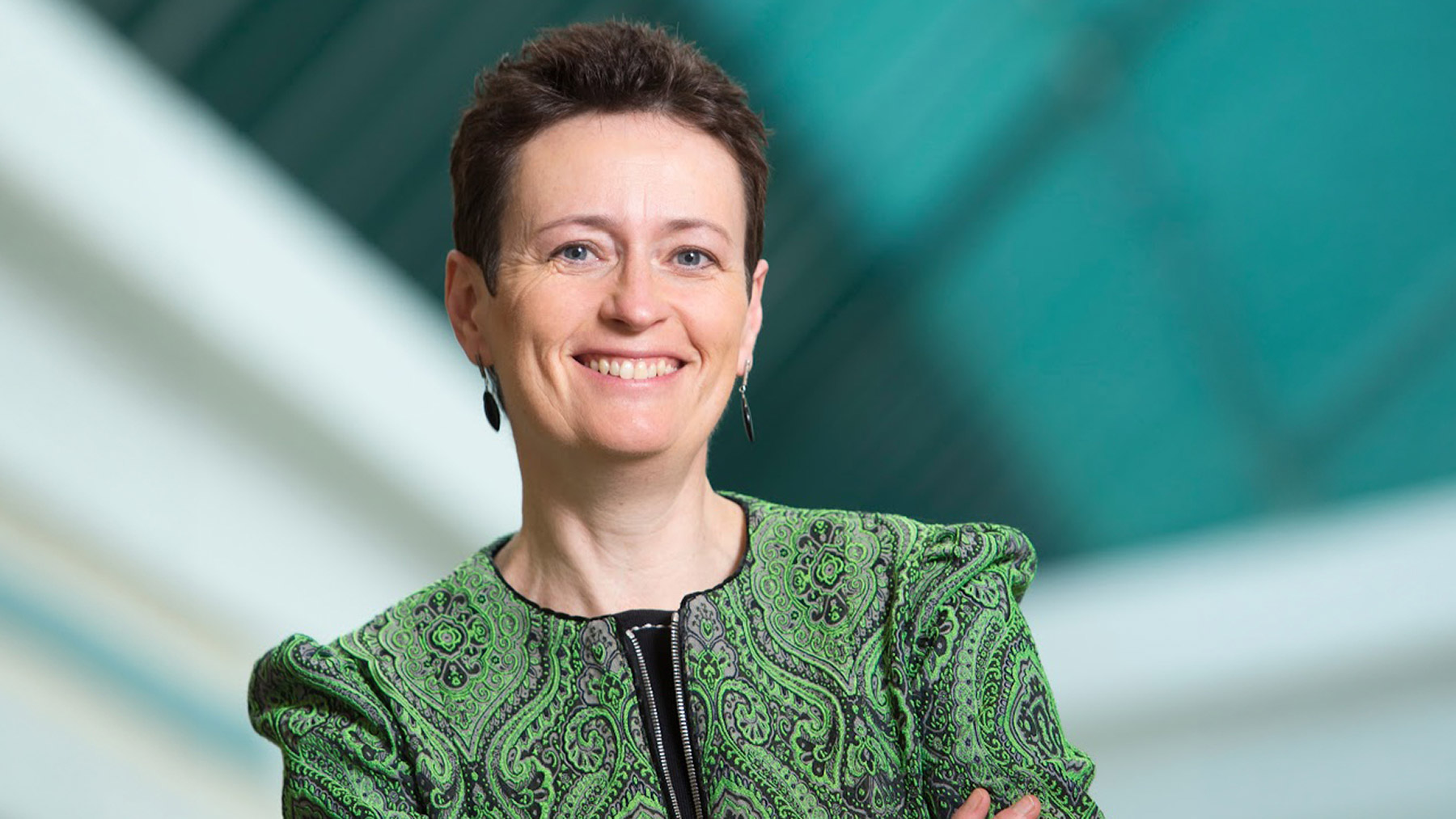
Petra Jane Lewis, MBBS, FACR, is an awarded physician educator who played a key role in the founding and editorial development of ACR’s RadExam® — a unique program providing formative assessment to prepare the next generation of radiologists. Lewis and her team of resident educators began building RadExam in 2017, developing questions and exam content to launch, grow and sustain a national radiology resident assessment system.
ACR created RadExam in collaboration with the Association of Program Directors in Radiology (APDR) to provide standardized, peer-reviewed questions for radiology residents.
Lewis, who recently stepped down as chief editor of RadExam, spoke with the Bulletin about the changes she has seen (and facilitated) over the years — and the benefits for residents and radiology programs that have endured and will continue long into the future.
RadExam was a concept I brought to ACR leadership back in 2017 and they were incredibly supportive and enthusiastic about it. The College already deployed both DXIT and TXIT, but those are once-a-year exams. It can be difficult to know what to do with those results — there’s a small number of questions in each section and they apply across all four resident levels (years). This means that perhaps an R1 resident might only be able to answer a couple of questions in a specific section. I brought them an idea for developing an online exam system that program directors could use for formative assessment at the end of every rotation. We developed exams that were specialty specific and focused on the individual levels of resident training (years one through four). This was a collaborative project through ACR, and we recruited editors and authors from across the country through APDR.
First, the software had to be developed. Then we had to assemble an exceptionally large bank of questions — and do it very quickly. We asked faculty to submit preexisting question databanks they had access to as well as new questions. ‘Retired’ DXIT and ACR CPI modules were also uploaded. Then, we had a ton of editing to do because we were very keen from the outset that these be exceedingly high quality — that they were up to the same standards that ABR holds its question writers to. Many of our authors and editors had previously written or edited for the ABR and other examination organizations, so we had some very experienced people working for us. It was an incredible lift for everyone to get ready for our three-month pilot in 2018. We took this project from zero to having over 4,500 questions and nearly 100 exams in less than 18 months. We developed two exams for every resident level across the board in each section — from GI to physics and everything in between.
We have 6,400 questions in the system and we’ve built roughly 160 exams. That’s a lot of questions, and they are all high-quality with regular statistical review and auditing.
Within a year of RadExam becoming available, I remember going to APDR meetings and RadExam had become part of their vernacular. We’ve had over 700 volunteers working on RadExam over the years. We have two Senior Editors for each specialty who have teams of Associate Editors under them that manage other authors and editors. We have 6,400 questions in the system and we’ve built roughly 160 exams. That’s a lot of questions, and they are all high-quality with regular statistical review and auditing. Nearly 80 percent of residency programs use it, which is incredible. It’s just what people want to use.
Now that I have stepped down, Tara M. Catanzano, MD, who has been with us from the beginning, has taken over as chief editor. With the program in her capable hands, ACR approached me about a new online video series. ACR has a multi-layered approach for helping residents develop their case presentation skills.
I am heading up a team of faculty and residents, including several from the Resident and Fellow Section, that has been putting together a series of short videos, both for residents and faculty.
In Phase I of the ACR’s approach, we have an open-access video series built on essential case presentation skills for residents. For example: strategies for managing anxiety and making a case for the favored diagnosis. In addition, we have videos for the faculty. While most faculty are accustomed to showing cases and getting residents to take them, many aren’t as experienced in helping the residents do strong formal case presentations. Faculty may be unfocused, give too many clues or let the residents drag on for too long in one area. We have at least 12 videos up now and are planning more including showing faculty having residents take cases in a realistic format.
Everyone in academia is so stretched now. Clinical workloads have climbed steeply and just putting together a case review session can become a momentous task. The College’s efforts around this, including these videos, can make a significant difference in residents’ training.
Interview by Chad Hudnall, senior editor, ACR Publications.
ACR has developed education designed to help residents, fellows and faculty master the art of clinical reasoning and oral case presentation under pressure. Whether you're a resident or fellow preparing for an oral case presentation or a faculty member guiding learners through the process, ACR offers curated videos, expert tips and viable strategies to help you succeed.
Learn moreACR Supports Radiation Therapy
ACR, ASTRO and ACRO agree that relying on legacy HOPPS cost distributions will irreparably harm freestanding radiation centers.
Read moreThe Case for Medicare Payment Reform: Protecting Patient Access
The latest HPI study looks at how shrinking Medicare reimbursement rates are contributing to disparities in screening and patient care.
Read more
The Same Language
ACR’s PE-RADS™️standardizes how radiologists report pulmonary embolism and bolsters communication with other ordering clinicians.
Read more